Composer · Violinist · Mathematician
NadiaKarpenko
Sharing my thoughts and voice with the world through music.
Selected works
Featured compositions
Nadia’s music moves between introspection, intensity, playfulness, and irony, often through a stream-of-consciousness approach. Ooy Song draws on the Ukrainian music of her childhood, Scherzando conveys the playful shifts of idle thought, and her cadenzas for Beethoven’s Violin Concerto unite composition with virtuosity.
 Nadia’s music moves between introspection, intensity, playfulness, and irony, often through a stream-of-consciousness approach. Ooy Song draws on the Ukrainian music of her childhood, Scherzando conveys the playful shifts of idle thought, and her cadenzas for Beethoven’s Violin Concerto unite composition with virtuosity.
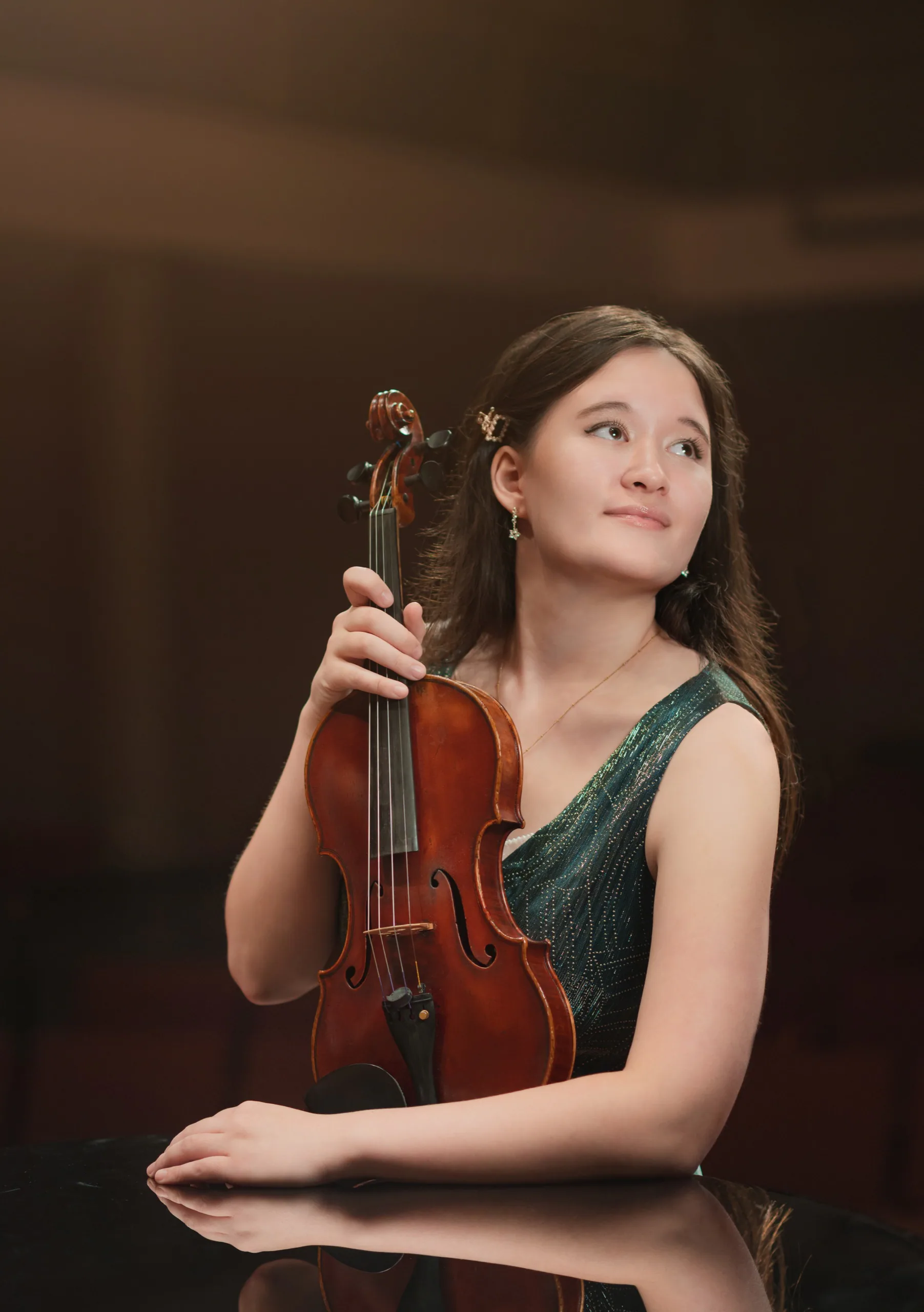
Two practices
From thought to composition to performance.
While composition gives form to thoughts, moods, and ideas; performance gives them immediacy and life. By working as both composer and violinist, Nadia seeks to understand this entire journey and develop the creative and technical freedom to communicate musical ideas as fully as possible.